2 World Cups, 1 Meeting With Maradona, 8 Years Apart: Emile Mbouh's Legacy Carries Africa's 2026 Hopes
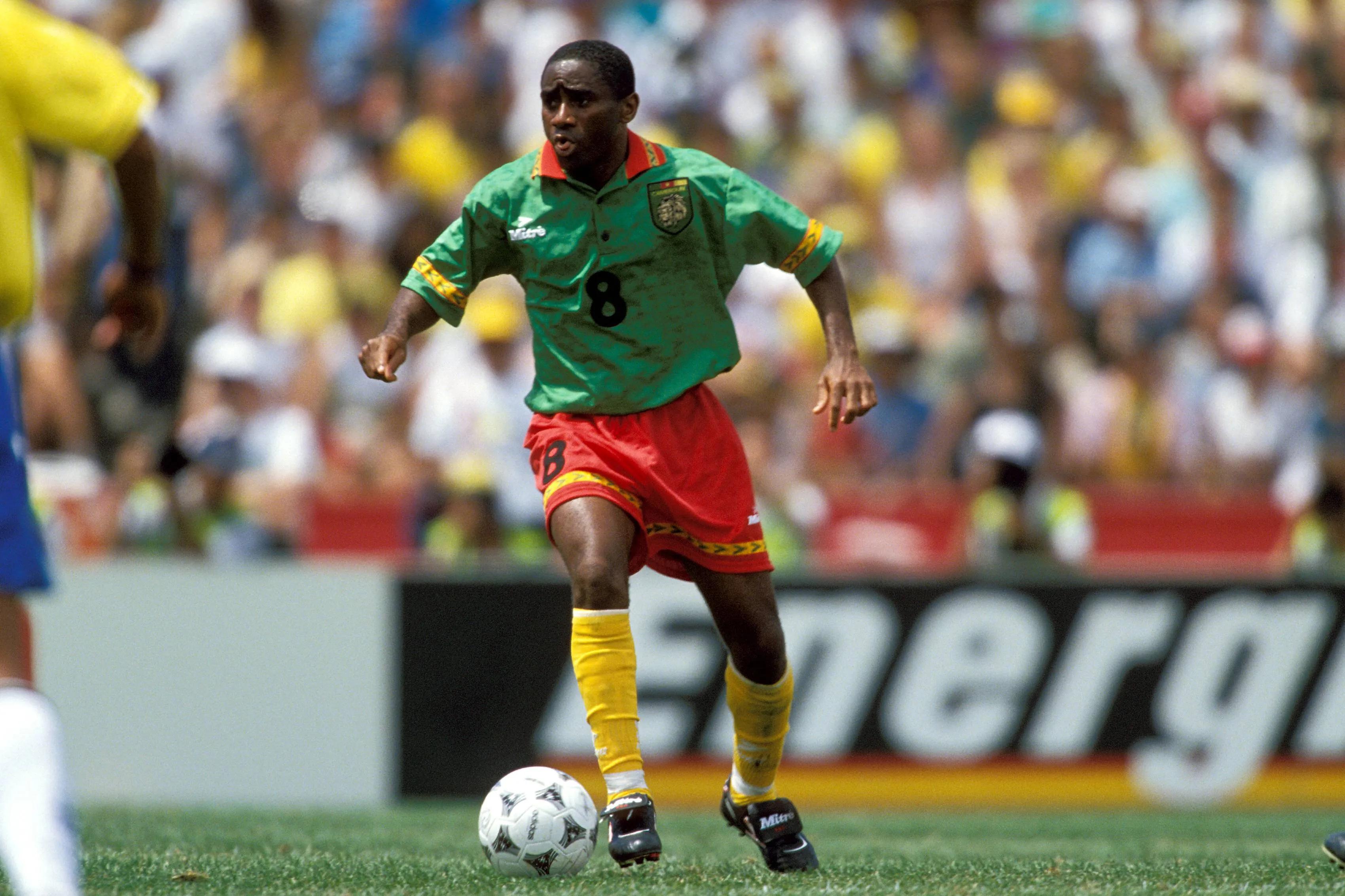
Emile Mbouh may not be a household name among casual football followers, but his extraordinary journey through two editions of football's greatest spectacle — Italia 1990 and USA 1994 — weaves him into the very fabric of World Cup legend. Born in 1966 in the bustling Cameroonian port city of Douala, Mbouh grew up in an era when television had not yet reached most households in his country. He absorbed the magic of the beautiful game through the crackling commentary of radio journalists, painting mental pictures of distant stadiums where his heroes performed. Mbouh's path to World Cup glory saw him go toe-to-toe with some of the most iconic figures in football history. In 1990, he faced Diego Maradona's Argentina in the tournament opener, tasked with helping to neutralize the greatest player of his generation as Cameroon pulled off one of the most stunning upsets in World Cup history — a 1-0 victory that announced African football's arrival on the global stage. Two years later at USA 1994, Mbouh lined up against Carlos Valderrama's Colombia, Romário's devastating Brazil, and Paul Gascoigne's electrifying England, accumulating 4 World Cup appearances across both tournaments. While his brothers idolized Brazilian icons like Pelé and Zico, Mbouh found his hero closer to home — Grégoire M'Bida, the elegant attacking midfielder who represented Cameroon at the 1982 FIFA World Cup in Spain. Mbouh wore the number eight shirt throughout his career specifically because of M'Bida, a gesture of homage that reflected the deep lineage of Cameroonian football. Though not a creative genius in the mold of his idol, Mbouh carved out his own niche as an indefatigable box-to-box midfielder whose engine never seemed to run dry, covering an average of 11 kilometres per match at a time when such metrics were not yet officially tracked. Now, as Africa's representatives — including Cameroon, Senegal, Egypt, Tunisia, Morocco, and Côte d'Ivoire — compete at the 2026 World Cup, Mbouh's legacy serves as both inspiration and reminder. African nations have produced 13 quarterfinal appearances in World Cup history, with Cameroon (1990) and Senegal (2002) reaching the quarterfinals. Mbouh's generation broke the psychological barrier that suggested African teams could not compete with the world's elite. As a new generation of African stars takes the pitch across North America, they carry forward a legacy that Mbouh and his contemporaries built with blood, sweat, and an unshakeable belief that football's highest peaks are accessible to all who dare to climb.